BBC Persian television launches
Issue 8, Spring 2009

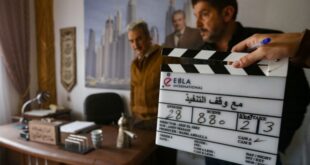
Image courtesy of BBC Persian TV
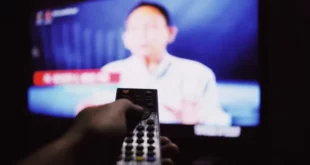
On January 14, the BBC launched its Persian-language satellite television network, BBC Persian, with a £15 million ($21 million) annual budget, the British broadcaster’s latest foray into a foreign language channel after BBC Arabic went on air in 2008.[1]
As has been the case for most foreign language channels linked to Western governments, a cloud of suspicion has hung over BBC Persian, much like how the U.S.-government funded al-Hurra and Voice of America (VOA) are viewed in the Middle East, as soft power at its most blatant and spectacular.
For while the BBC is funded by the British public paying an annual television license, PTV – as it is referred to within the BBC – receives additional funding from the Foreign and Commonwealth Office.
Indeed, PTV made waves from London to Tehran before the channel was even launched, with British tabloid newspaper The Daily Mail spouting off on the ill usage of taxpayer money,[2] while Tehran eyed the channel as a potential rabble rouser on par, if not actually worse, politically speaking, than the 50-odd private Persian channels that illegally broadcast into Iran from LA. – “Tehrangeles.”[3]
While VOA has been broadcasting Persian news and discussion programming into Iran by satellite since 1999, such forays by foreign powers into the Iranian television market are rare. The launch of BBC Persian TV comes some 69 years after the BBC Persian Radio Service went on air during World War II, when the news was firmly controlled by the propaganda department of Iran’s Ministry of Information.[4] Ever since, the BBC has had a complex relationship with its Iranian audience, being viewed as a credible alternative to state propaganda at times and an agent of British meddling at others.
BBC radio broadcasts were considered instrumental in turning the people against Reza Shah Pahlavi, who was forced to abdicate following the British and Russian occupation of Iran in August 1941, [5] while the service carried out a similar function during the CIA-backed overthrow of Premier Muhammad Mossadegh in 1953.[6] Conversely, in the lead up to the overthrow of Muhammad Reza Shah Pahlavi in February 1979, the Persian Service was accused of backing Ayatollah Khomeini when it ran interviews with the revolutionary leader and aired segments of his speeches.
Nearly 30 years after the Islamic Revolution and just months before PTV was to launch, the BBC was again under fire.
In late October 2008, the Iranian Ministry of Culture issued a statement that it had “reliable reports” that the BBC Persian Service had “attempted to make suspicious and unjustifiable contacts that flout the law,” and were making “an effort to attract notorious individuals and create programs about suspicious topics.”[7] Intelligence minister Gholam-Hossein Mohseni Ezhei followed up by saying “BBC activities are against the national security of Iran,” and that correspondents were under surveillance.[8]
Then in early January 2009, Culture Minister Mohammad Hossein Safar-Harandi announced PTV was not to get a license. No PTV correspondents were to be allowed in the country and BBC News, which has a bureau in Tehran, was barred from sharing footage with the channel or face having its license revoked. “The BBC English channel will be confronted if it abuses its legal rights by producing reports for BBC Persian and we are continually on watch for that,” he said.[9]
Safar-Harandi went on to advise journalists to avoid “unconventional” and “illegal” activities, in addition to naming Iranians that had applied for jobs with PTV.[10]
So far, seemingly not so good for the fledgling channel: PTV did not have a bureau in Iran, the channel could not be viewed legally due to the ban on private satellite receivers, and the website is filtered by the Iranian government.
A change in tune?
But while the outlook for the channel did not appear overly optimistic, four months down the line PTV has garnered thousands of viewers and one of the BBC’s highest numbers of web hits, while the mood in Tehran seems to be softening in its approach to the channel. Iranians were clearly viewing PTV by satellite – an estimated 60% of all households have illegal satellite receivers – and accessing the BBC Persian website.[11]
According to Rob Beynon, Acting Manager of PTV in London, “early indications from Tehran suggest that one in five people who have access to satellite TV tuned in during the first month. We have been encouraged by the fact that BBC Persian received 300,000 blog articles and mentions and around half a million searches for “BBC Persian Television” on Google Farsi – all in the first month after launch.”[12]
PTV was also being watched in the Persian speaking countries of Tajikistan and Afghanistan, a reason for the channel’s title rather than ‘BBC Iran TV’, in the hope of appealing to the estimated 100 million Persian speakers worldwide.[13]
[1] BBC Arabic TV was launched March 11 2008, with an annual budget of £25 million a year, the broadcasters second attempt following a disastrous teaming up with Saudi Arabia’s Orbit channel in the mid-1990s, ending in 1996 after two years when the BBC fell out with Orbit.
[2] ‘£15m a year to give Iran a BBC channel it doesn't even want,’ Paul Revoir, The Daily Mail, January 8 2009 - http://www.dailymail.co.uk/news/article-1109502/15m-year-Iran-BBC-channel-doesnt-want.html On the other hand, British academic Timothy Garton Ash called the channel the “most unambiguously positive developments I have seen in a long time, and worth every penny of its £15m annual budget (the price of about one bolt on a Trident missile)” - ‘If Obama and Khamenei want to get along, they should start watching TV,’ Timothy Garton Ash, The Guardian, January 15, 2009 -http://www.guardian.co.uk/commentisfree/2009/jan/15/bbc-persian-television-iran
[3] There are an estimated 50 satellite channels beaming into Iran from Los Angles – Tehrangeles – where there is a sizeable Iranian community. The majority of the channel’s are against the Iranian government, while some want to see the return of the Pahlavi dynasty. Despite satellite being banned in Iran, satellites are widespread and the channels are watched. The exception is during elections when the government blocks non-governmental channels through magnetic wave frequencies.
[4] BBC Persian Radio was launched 28 November 1940.
[5] “The BBC Persian Service, 1940-1953, and the Nationalisation of Iranian Oil,” Hossein Shahidi, Journal of Iranian Research and Analysis, Volume 17, No. 1, April 2001
[6] “The BBC Persian Service was seen by most listeners as putting across the point of view of the British Government and of the Anglo-Iranian Oil Company, the fore-runner of today's British Petroleum, or BP. Listeners were particularly enraged by commentaries which criticised Dr Mossadegh and sought to persuade Iranians that the nationalisation of oil was illegal and would not be in Iran's interest.’ ‘Injaa landan ast: BBC Persian Service 60 Years On’, Hossein Shahidi, September 24, 2001, The Iranian - http://www.iranian.com/History/2001/September/BBC/
[7] Who's Afraid of BBC Persian TV? By Amir Mansouri, February 7, 2009 - http://www.payvand.com/news/09/feb/1080.html
[8] Ibid. Such statements by the Iranian government must be taken seriously, given the recent arrest of Iranian-American freelance journalist Roxana Saberi, who has worked for the BBC, for allegedly spying for the USA - 'Iran jails US journalist Roxana Saberi as spy' Peter Beaumont, The Observer, 19 April 2009 - http://www.guardian.co.uk/world/2009/apr/19/iran-america-journalist-sentence
[9] “Iran bans BBC's Farsi language TV station, journalists asked not to work for foreign media, Newswatch, January 29, 2009- http://www.newswatch.in/newsblog/3879
[10] Who's Afraid of BBC Persian TV? By Amir Mansouri, February 7, 2009 - http://www.payvand.com/news/09/feb/1080.html
According to a rumor within PTV, two unsuccessful applicants for PTV that had attended a vetting and training course in Istanbul were later arrested in Iran: One for making a fake BBC Press pass to seemingly better his situation in the country, while the other tried to claim asylum in Britain after Tehran accused him of being a spy.
[11] ‘BBC Persian TV is launching!’ Omid Habibinia, September 30, 2008, - http://2006omid.blogspot.com/2008/09/bbc-persian-tv-is-launching.html
[12] GND Audience Research February 2009, provided by PTV.
[13] There are an estimated 70 million Farsi speakers in Iran, 20 million in Afghanistan and 10 million in Tajikistan.
[14] John Peel was a popular BBC Radio One disc jockey in the UK.
[15] Jonathan Ross, a television chat show host, reportedly has a £18 million, 3 year contact with the BBC – ‘Ross and Moyles face pay cuts in new £400m BBC squeeze,’ Chris Tryhorn and John Plunkett, The Guardian, March 20 2009 - http://www.guardian.co.uk/media/2009/mar/20/bbc-ross-moyles-pay-cut
[16] The Long story of my critic [sic] on BBC Persian!’ Omid Habibinia, October 31, 2008 - http://2006omid.blogspot.com/2008/10/long-story-of-my-critic-on-bbc-persian.html
[17] ‘Launching Persian TV’, Steve Williams, The News Magazine, Jan-Feb 2009, Issue 24, page 21.
[18] Investors sought for UAE Farsi radio station, Andy Sambidge, Arabianbusiness.com, 3 April 2009 - http://www.arabianbusiness.com/551467-investors-sought-for-uae-farsi-radio-station
[19] Saudis planning to launch Turkish, Persian-language TV channel, paper', al-Hayat, April 22, 2009 – Translated www.mideastwire.com/.

Comments
Submit a comment about this article
Submit a Comment