Arab Media & Society The Arab Media Hub
Issue 39, Winter/Spring 2025
http://doi.org/10.70090/AMS.39whf
Abstract
Western media widely framed Qatar 2022 as the “most controversial World Cup in history”, with debate centering on migrant labor abuses, human rights violations, and LGBTQ+ discrimination rather than religion or culture. This article examines how YouTube videos and their comment sections reproduce, contest, or reconfigure these frames. It situates patterns of reputational contestation alongside post-tournament tourism and macroeconomic indicators as contextual triangulation rather than causal effects. The study adopts a multi-method media-analytics design. It combines dictionary-based text mining of video transcripts with Latent Dirichlet Allocation (LDA) topic modeling of comments, and interprets these findings alongside tourism statistics, macroeconomic indicators, and relevant survey data. Results show that institutional news and documentary channels with predominantly critical stances consistently foreground labor exploitation and human-rights concerns. By contrast, faith-based advocacy creators and some Qatar-based international programming more frequently mobilize counter-frames emphasizing Western double standards, Islamic values, and digital da‘wah. Hybrid cases demonstrate that critique and defense can coexist within the same platform ecology. Audience responses selectively amplify, contest, or hybridize these framings in the comment sections. Despite persistent negative perceptions in parts of Western Europe, contextual indicators show that Qatar 2022 coincided with record tourist arrivals and growth in non-energy sectors. This pattern underscores that contested digital framings do not straightforwardly map onto macro-level economic performance.
Introduction
Since Qatar was chosen to host the 2022 World Cup on December 2, 2010, much Western and European media coverage has framed the tournament as “the most controversial World Cup in history.” Critical reports and investigations have repeatedly highlighted four intertwined issues. These include allegations of corruption in the bidding process. They also include the treatment and deaths of migrant workers. Another recurring issue concerns restrictions on LGBTQ+ rights. A final strand points to broader debates about human rights, labor law, and environmental sustainability (Parliament 2022). Investigative journalism by outlets such as The Guardian and other news organizations documented how thousands of migrant workers from South Asia, Africa, and Southeast Asia died in Qatar during the post-2010 construction boom. This reporting drew attention to the kafala sponsorship system. It also highlighted unsafe working conditions. In addition, it raised concerns about opaque death certification practices (Pattisson and McIntyre 2021). European broadcasters and newspapers, including France 24 and Le Monde, frequently linked these issues to a wider critique of FIFA’s decision-making. They also accused Qatar of using a sports mega-event to launder or obscure its human-rights record. This helped popularize the language of “sportswashing” in public debate (Dagorn and Derœux 2022).
Alongside this critical media discourse, scholarship on global sport and international relations has situated Qatar 2022 within a broader strategy of soft power and nation branding (Brannagan and Giulianotti 2015). The World Cup is not merely a sporting spectacle. It is a strategic opportunity for investment in football, media, and cultural diplomacy. For the host nation, it is a crucial means to enhance global visibility, project an image of modernity and stability, and gain significant leverage in regional and international competition (Grix and Lee 2013). Brannagan and Giulianotti conceptualize this dynamic as a “soft power-soft disempowerment nexus.” In their view, the same mega-event that is intended to generate admiration can also trigger intensified global scrutiny. This scrutiny can produce reputational costs. The risks are especially acute when media and civil-society actors foreground migrant workers, LGBTQ+ rights, or corruption (Brannagan and Giulianotti 2015). Al Thani similarly shows how Qatar’s attempts to channel soft power through the World Cup are continually negotiated through media narratives about labor reforms and the international image of the state (Al Thani 2021).
These tensions in the soft power-soft disempowerment nexus are visible in how Western and European media outlets, NGOs, and activist networks continued to foreground human rights, migrant labor, and LGBTQ+ issues. They often framed Qatar as a problematic, or even illegitimate, host (Pattisson and McIntyre 2021). Qatar 2022 therefore crystallizes an intersection of digital media, religion, and global power dynamics. A Muslim-majority state used a sports mega-event and digital infrastructures to promote an Islamic soft-power narrative and an economic future. At the same time, transnational media and online publics responded with competing representations of Islam, the Gulf, and global norms of rights and justice.
This study positions YouTube videos about the Qatar 2022 World Cup as mediated frames that participate in these overlapping projects of soft power, economic branding, and digital da‘wah. The comment sections are discursive spaces where such frames are endorsed, negotiated, or contested. Building on work that sees YouTube as both a participatory public sphere and an algorithmically curated environment (Edgerly et al. 2009; Burgess and Green 2018), the research focuses on four highly politicized issue clusters: (1) human rights; (2) migrant workers; (3) LGBTQ+ issues; and (4) Islamic values and da‘wah. It analyzes how selected YouTube videos construct narratives about Qatar and Islam. It also examines how comment-section publics respond, as captured through an English-language preprocessing pipeline. By combining computational topic modeling of comments with framing analysis of video transcripts, the study traces how affect, morality, and issue emphasis are organized in online discourse. It shows how these patterns may align with, or challenge, Western critical narratives. It also shows how they may reinforce, or contest, Qatar’s own soft-power messaging.
Building on this design, the study does not claim to measure “global public opinion” in a representative sense. Instead, it treats YouTube as an algorithmically curated arena where platform-specific publics construct, circulate, and contest meanings about Qatar 2022. Within this arena, some narratives may support Qatar’s nation-branding and Islamic soft-power goals. Others foreground human-rights violations, labor exploitation, or restrictions on sexual minorities. These competing frames can complicate Qatar’s reputational positioning alongside its economic objectives. The interplay between these narratives is central to understanding how sports mega-events function at the intersection of economic profit, soft power projection, and digital da‘wah. Accordingly, the study addresses the following research questions:
- RQ1: How do YouTube videos about the Qatar 2022 World Cup frame human rights, migrant workers, LGBTQ+ issues, and Islamic values in ways that support or challenge Qatar’s nation-branding and soft-power objectives?
- RQ2: What dominant themes emerge in comments responding to these videos, as captured through an English-language preprocessing pipeline, and how do these audience responses echo or contest the videos’ narratives about Qatar, Islam, and Western actors?
- RQ3: How do contested YouTube framings of Qatar 2022 coexist with post-tournament tourism and macroeconomic indicators?
By answering these questions, the study contributes to interdisciplinary discussions in digital religion, media studies, and political communication. It offers an empirical account of how YouTube functions as a site where sports diplomacy, economic interests, and Islamic da‘wah intersect. It also shows how algorithmically mediated debates can amplify, or constrain, a Muslim-majority state’s attempt to leverage a mega-event for soft power and economic gain.
Methods
Research design and media analytics approach
This study adopts a media analytics design that combines computational text mining and qualitative content analysis to examine digital narratives surrounding the 2022 FIFA World Cup in Qatar on YouTube. The analysis focuses on two interrelated layers of platform activity: (1) YouTube videos addressing various issues related to the Qatar 2022 World Cup, and (2) comments responding to those videos. This design makes it possible to map the thematic structure of debates about Islam. It captures recurring issues such as human rights, migrant workers, and LGBTQ+ concerns. The approach also helps characterize how different channels frame Qatar and Islam. Finally, it situates these patterns within broader discussions of soft power, nation branding, attention economies, and digital da‘wah (Burgess and Green 2018; van Dijck 2013; Papacharissi 2015).
Computationally, the study conducts a systematic analysis of video transcripts. It combines computational preprocessing, including keyword counts and extractive summaries, with manual coding. The manual coding assesses issue salience, stance, tone, and references to economic or da‘wah-related benefits. All computational procedures are implemented in Python using standard natural language processing and topic-modeling libraries. To identify dominant themes in YouTube comments associated with each video, the study employs Latent Dirichlet Allocation topic modeling (Blei et al. 2003). The topic-modeling outputs are then interpreted through qualitative content analysis. This analysis focuses on how commenters evaluate Qatar, Islam, and Western actors. It also examines whether commenters echo, rework, or contest the frames presented in the videos.
Algorithmic Visibility, Soft Power, and Media Management
Within a media management context, this analysis examines the intersections between platform visibility, soft power, and the attention economy as shaped by algorithmic distribution logics. In platformed media environments, visibility is structured by algorithmic systems that prioritize engagement over normative evaluations of content (Couldry and Hepp 2017; Gillespie 2019). For states and state-adjacent actors, this condition transforms reputation into a management problem mediated by platform dependence and attention competition. On YouTube, reputational narratives circulate within a hybrid ecology involving institutional media, entertainment content, advocacy-oriented creators, and user commentary, thereby limiting the capacity of any single actor to control framing outcomes.
From a media management perspective, soft power can be understood as a form of managed strategic communication rather than a passive accumulation of positive image (Nye 2004). Within the attention economy, high levels of visibility, including critical visibility, do not translate linearly into economic outcomes, as attention constitutes a scarce resource shaped by platform monetization logics (Wu 2017; Srnicek 2017). Accordingly, the economic indicators in this study are used for contextual triangulation. They illustrate how reputational contestation can unfold alongside macro-level performance. They are not treated as direct effects of media coverage.
YouTube video sampling
The YouTube corpus for this study consists of a purposive sample of ten videos. Each video explicitly discusses the Qatar 2022 World Cup and addresses at least one focal issue cluster: human rights, migrant labor, LGBTQ+ issues, or Islamic values. Videos were identified via YouTube search using the keyword “Qatar 2022 World Cup” and selected using four criteria:
- Videos were published in 2022. This includes influential pre-tournament content and videos circulated during the tournament period (November-December 2022). This approach captures both the development and persistence of key reputational and moral narratives surrounding Qatar 2022.
- Each video explicitly refers to the 2022 FIFA World Cup in Qatar and addresses at least one of the four focal issue clusters: human rights, migrant labor, LGBTQ+ issues, or Islamic values.
- The sample includes a range of channel genres and institutional positions. It covers institutional news and documentary channels, entertainment or satirical programming, advocacy-oriented or faith-based creators, and independent commentators. This diversity reflects YouTube’s hybrid media ecology.
- The comments associated with each video contain responses that are substantively relevant to the video content, as confirmed through a brief manual scan to ensure active interaction between content and audience.
Searches were conducted in English, with results sorted by relevance. To reduce personalization bias, all searches were performed in a logged-out browser environment with cleared cache and cookies. For each of the ten selected videos, publicly visible metadata were recorded. These include channel name and classification, video title, upload date, duration, view count, like count, and the total number of comments at the time of data collection. These engagement indicators are used descriptively to contextualize the analysis of frames and comment debates. They are not treated as measures of causal impact. Table 1 presents the list of video samples used as the research dataset.
Table 1. Research Dataset Video Samples
| ID | Channel | Title | Geo-base | Genre | Institutional Status | Stance | Date | Views | Comments |
| 1 | BBC | How Qatar got to host WC | European (UK) | News / Explainer | Publ. Service Broadcaster | Critical | 20/11/2022 | 272k | 1735 |
| 2 | DW Documentary | Qatar in spotlight | European (DE) | Documentary | Publ. Service Broadcaster (Int.) | Mixed | 23/11/2022 | 63.5k | 1385 |
| 3 | Al Jazeera English | How WC will change Qatar | Qatar-based | Talk show / News | Int. Broadcaster | Mixed | 20/11/2022 | 177k | 296 |
| 4 | France 24 | Shadow workers of Qatar | European (FR) | Documentary | Publ. Service Broadcaster (Int.) | Critical | 28/10/2022 | 26.2k | 136 |
| 5 | Sky News | What to expect | European (UK) | News / Preview | Commercial | Mixed | 19/11/2022 | 60k | 188 |
| 6 | Sky News | Has perception changed? | European (UK) | Interview / Talk | Commercial | Mixed | 19/12/2022 | 39.9k | 399 |
| 7 | OnePath Network | Why they hate Qatar | Transnational | Advocacy / Da’wah | Digital-native | Supportive | 22/11/2022 | 390k | 2907 |
| 8 | LastWeekTonight | Qatar World Cup | US-based | Satire-entertainment | Commercial | Critical | 21/11/2022 | 9.83M | 17574 |
| 9 | BBC | Under-reporting deaths | European (UK) | Investigative News | Publ. Service Broadcaster | Critical | 19/06/2022 | 929k | 3735 |
| 10 | ESPN FC | Infantino speech | US / Transnat. | Sports commentary | Commercial | Mixed | 19/11/2022 | 90.5k | 1008 |
Note: Channel classification is based on observable attributes (geo-base, genre, institutional status) and editorial stance toward Qatar 2022. The stance category is coded independently from channel origin and genre.
YouTube channel classification in this study employs a multi-dimensional typology based on operational and observable criteria. Each sampled video is coded along four main dimensions. The first is ownership and geo-base, classified as Qatar-based, European, US-based, or transnational. The second is content genre, including hard news or documentary, talk show or interview, satire-entertainment, advocacy or da‘wah-oriented commentary, and sports media commentary. The third is institutional status, coded as a public-service broadcaster, commercial broadcaster, or digital-native creator, including faith-based channels. The fourth is stance toward Qatar 2022, classified as critical, mixed, or supportive. Stance is coded independently from geo-base, genre, and institutional status. This allows the analysis to capture cases where critique and defense coexist within the same channel or media ecology.
Video transcript analysis and framing
The transcript of each sampled video was extracted from the video content. Transcript retrieval was performed using the automatic text feature generated by YouTube or a third-party browser extension, Glasp. Glasp is a social PDF & Web highlighter that allows the collection, organization, and sharing of insightful ideas from the web (https://glasp.co/). To provide a descriptive overview of how each video engages the four focal issue clusters, this study used a simple, manually constructed keyword dictionary. The dictionary covered human rights, migrant workers, LGBTQ+ issues, Islamic values, and moral-affective language. This approach follows standard practice in dictionary-based content analysis and text-as-data research, where domain-specific lexicons serve as transparent indicators of issue salience and evaluative tone (Taboada et al. 2011). The dictionaries were constructed iteratively by combining (a) close reading of a subset of transcripts and (b) common terminology used in human-rights and migrant-labor reporting on Qatar 2022 by organizations such as Amnesty International and Human Rights Watch. Concretely, the dictionaries were defined as follows:
- Human rights dictionary (HUMAN_RIGHTS_KEYWORDS)
Included multi-word expressions such as “human rights” and “civil rights”, and single-word terms commonly used in human-rights reporting: rights, freedom, justice, amnesty, ngo, violation, abuse, dignity, and universal. These terms reflect standard human-rights vocabulary in both academic and NGO discourse.
- Migrant-worker dictionary (MIGRANT_WORKER_KEYWORDS)
Targeted words associated with migrant labor and labor exploitation in the Qatar 2022 context: migrant, migrants, worker, workers, labour, labor, kafala, construction, stadium, wage, wages, salary, exploitation, exploited, death, deaths, dead, and unsafe. Terms such as kafala, wage, exploitation, and death are directly drawn from recurring language in major reports on migrant workers in Qatar.
- LGBTQ+ dictionary (LGBTQ_KEYWORDS)
Captured references to sexual-minority rights debates: lgbt, lgbtq, gay, gays, lesbian, trans, transgender, queer, one love, rainbow, same sex, homosexual, homophobia, and homophobic. These expressions are standard in global LGBT-rights and Qatar 2022 coverage, especially around the “One Love” armband controversy and rainbow symbolism.
- Islamic-values dictionary (ISLAMIC_VALUES_KEYWORDS)
Included explicitly religious terms and more general vocabulary used to invoke Islamic norms and identity: islam, islamic, muslim, muslims, allah, quran, koran, sharia, shari'a, haram, halal, adhan, azan, hijab, niqab, modesty, values, morality, moral, religion, and religious. These were informed by prior work on digital religion and Islamic discourse online, where such terms frequently mark the presence of religious meaning-making and da’wah (Mutia 2022).
- Moral-affective dictionary (MORAL_AFFECTIVE_WORDS)
A small set of evaluative and emotion-laden terms used to capture moralized discourse: hypocrisy, hypocrite, hypocritical, moral, immoral, sin, sinful, shame, shameful, disgrace, justice, injustice, oppression, oppressed, evil, good, right, wrong, corrupt, and corruption. This list was loosely inspired by research on moral-language dictionaries (e.g. Moral Foundations Dictionary) but simplified and adapted to the specific context of Qatar 2022 debates.
To support the validity of this dictionary-based transcript analysis, a manual verification step was conducted using random spot-checks of the videos themselves. Selected segments were re-watched to verify that keyword hits in the extracted transcripts matched the intended issue categories. This step also helps mitigate potential inaccuracies in automatically generated transcripts from YouTube or third-party extraction tools. The check focused on possible false positives from semantically broad terms such as “values,” “moral,” and “rights,” which may appear in contexts unrelated to religious or human-rights framing.
Where contextual ambiguity was likely, interpretation relied on close attention to the surrounding audiovisual discourse, including intonation, emphasis, and narrative context, especially in cases involving negation (e.g., “not gay,” “anti-LGBTQ”) or evaluative polarity. Ambiguous occurrences were then revisited during manual coding to ensure that issue classification was grounded in contextual meaning rather than isolated lexical presence. This combined automated-manual procedure is used to interpret dictionary-based indicators cautiously and to acknowledge the known limits of lexicon-based approaches in capturing contextual nuance.
Following this validation process, the dictionaries were applied in a standardized manner across all transcripts to generate comparable descriptive measures. All dictionaries were applied in a case-insensitive manner. For each transcript, the frequency of tokens matching each dictionary was counted and normalized per 1000 words. These measures served as heuristic indicators of issue salience and moral–affective intensity at the video level and as a starting point for the manual framing analysis. The Python code snippet used for the Analysis and Framing of Video Transcripts is presented in Figure 1 (see appendix). The code repository is available at https://github.com/mdidikrw/ams.
Table 2 presents the weight of the issue clusters generated by the Python code execution (Figure 1), based on the previously determined keywords. The code repository is available at https://github.com/mdidikrw/ams.
Table 2. Normalized dictionary indicators in video transcripts (per 1000 words)
| ID | Total Chara-cters | Total Words | Human Rights Count | Human rights (per 1000 words) | Migrant Count | Migrant (per 1000 words) | Lgbtq Count | Lgbtq (per 1000 words) | Islamic Values Count | Islamic Values (per 1000 words) | Moral Affect Count | Moral Affect (per 1000 words) |
| 1 | 4736 | 813 | 5 | 6.15 | 16 | 19.68 | 2 | 2.46 | 0 | 0 | 2 | 2.46 |
| 2 | 23313 | 4048 | 3 | 0.74 | 40 | 9.89 | 0 | 0 | 3 | 0.74 | 10 | 2.47 |
| 3 | 24572 | 4577 | 13 | 2.84 | 23 | 5.03 | 4 | 0.87 | 3 | 0.66 | 21 | 4.59 |
| 4 | 32601 | 6204 | 35 | 5.64 | 58 | 9.35 | 6 | 0.97 | 7 | 1.13 | 28 | 4.51 |
| 5 | 2881 | 475 | 1 | 2.11 | 7 | 14.74 | 1 | 2.11 | 2 | 4.21 | 1 | 2.11 |
| 6 | 32628 | 5958 | 3 | 0.5 | 36 | 6.04 | 2 | 0.34 | 14 | 2.35 | 6 | 1.01 |
| 7 | 6398 | 1123 | 4 | 3.56 | 15 | 13.36 | 2 | 1.78 | 20 | 17.81 | 16 | 14.25 |
| 8 | 23180 | 4254 | 11 | 2.59 | 51 | 11.99 | 6 | 1.41 | 0 | 0 | 12 | 2.82 |
| 9 | 1932 | 360 | 2 | 5.56 | 3 | 8.33 | 0 | 0 | 0 | 0 | 0 | 0 |
| 10 | 2299 | 427 | 0 | 0 | 5 | 11.71 | 1 | 2.34 | 2 | 4.68 | 1 | 2.34 |
Note: Values represent case-insensitive keyword frequencies normalized per 1000 words. These indicators are used descriptively as heuristic measures of issue salience and moral-affective intensity, and as an input to the subsequent manual framing analysis.
Table 2 reports the intensity of term occurrences per 1000 words across issue clusters. Building on these patterns, Table 3 summarizes the corresponding framing interpretations derived from contextual readings of the transcripts.
Table 3. Qualitative analysis of the issue cluster weights
| ID | Explanation |
| 1 | 1. Allegations of corruption scandal involving FIFA committee members in the selection of Qatar as the host of the 2022 World Cup
2. Allegations of labor/migrant worker exploitation and human rights violations, including LGBTQ+ issues 3. Net-zero carbon claims questioned by climate experts |
| 2 | 1. Cultural diplomacy and soft power: geopolitical transformation momentum and regional identity
2. Dependence on migrant workers |
| 3 | 1. Labor/migrant worker exploitation and human rights violations, including LGBTQ+ issues
2. Europe has not acknowledged the positive changes made by Qatar |
| 4 | 1. Discussion surrounding controversies regarding labor/migrant worker exploitation and human rights violations, including LGBTQ+ issues
2. Clarification from Qatari officials that they have made progress and condemnation of “Qatar bashing conspiracy” criticism |
| 5 | 1. Controversy regarding labor/migrant worker exploitation and human rights violations, including LGBTQ+ issues
2. Allegations of corruption scandal involving FIFA committee members in the selection of Qatar as the host of the 2022 World Cup |
| 6 | 1. The 2022 World Cup succeeded in becoming a platform for global cultural exchange and a momentum for transforming image and geopolitical influence
2. The 2022 World Cup served as a catalyst for accelerating labor reforms |
| 7 | 1. Western countries’ criticism regarding labor/migrant worker exploitation and human rights violations, including LGBTQ+ issues.
2. Allegations that Western countries are hypocritical and colonize and steal resources from Muslim countries |
| 8 | 1. Allegations of corruption scandal involving FIFA committee members in the selection of Qatar as the host of the 2022 World Cup
2. Allegations of labor/migrant worker exploitation and human rights violations, including LGBTQ+ issues |
| 9 | 1. Labor/migrant worker exploitation and human rights violations |
| 10 | 1. Defense of Qatar against all allegations of human rights violations, but instead opening up opportunities for global cooperation |
Thematic Analysis of Video Transcripts
Across the ten transcripts, the most consistent thread is the depiction of migrant worker exploitation. Every video contains at least some reference to migrants, but with different intensities and purposes.
- Migrant Worker Exploitation
The clearest labor-abuse framing appears in video 1, 4, 8, and 9. In these four videos, migrant-related keywords such as migrant, workers, labor, kafala, wage, death, unsafe occur at very high rates per 1000 words. The qualitative notes emphasize corruption in the FIFA bidding process, the kafala system, unpaid wages, unsafe conditions and heat-related deaths.
In this cluster, labor is not a peripheral issue but the main lens through which the entire tournament is problematized. Qatar 2022 is framed as structurally dependent on an exploited workforce, and the World Cup itself becomes evidence of systemic injustice.
- Human Rights Violations
Human-rights violations are tightly coupled to this labor story. Nine of the ten videos contain human-rights vocabulary, though with varying density. Videos 1, 4 and 9 stand out for their high “human rights” and “violation/abuse” counts per 1000 words, reinforcing their investigative character These videos are framed as exposing a “FIFA committee corruption scandal”, “migrant-worker exploitation and human-rights violations”, and “migrant-worker deaths in extreme heat”.
Video 3 adds an extra layer. It combines frequent references to rights and exploitation with discussion of legal reforms and European reluctance to acknowledge them. While all of these texts foreground harm, some (especially video 3) use the language of rights to create tension between an abusive past and an allegedly improving present.
- Western Hypocrisy and Double Standards
A third recurring topic is Western hypocrisy and double standards, most forcefully articulated in video 7 and 10, but also present in videos 2, 3 and 6. Quantitatively, video 7 is a clear outlier: alongside high migrant and human-rights counts, it has by far the highest density of Islamic terms and moral-affective language (e.g. hypocrisy, oppression, injustice, corruption). As the analysis notes, the video acknowledges Western criticism of exploitation, rights and LGBTQ+ issues but flips this into a narrative where Western countries are depicted as hypocritical, neo-colonial actors who “steal resources from Muslim countries”.
Infantino’s speech in video 10, although much shorter, follows a similar pattern. Migrant workers and LGBTQ+ issues are mentioned frequently, but the formal language of “human rights” is largely absent. Instead, his defense of Qatar is framed in terms of unfair judgement, shared guilt and the need for global cooperation. Videos 2, 3 and 6 develop this theme in a more moderated way. They acknowledge scandals but highlight selective Western outrage, the role of European media, or the lack of recognition for Qatar’s reforms. Taken together, these transcripts show that “Western hypocrisy” is not just a rhetorical flourish in the comments but a structured counter-frame already present at the video level.
- Islamic Values and Religion
Islamic values and religion form another important topical layer, though highly unevenly distributed. Islamic terms and references to religion or morality appear in seven of the ten transcripts, but they are dominant only in video 7, where the rate of Islamic-values keywords per 1000 words is an order of magnitude higher than in any other video. Here, Islam is central to how the controversy is narrated. Qatar is defended explicitly as a Muslim country, and Western hostility is interpreted as Islamophobia. The World Cup is also implicitly linked to da‘wah by presenting Islamic ethics as superior to what is framed as Western moral failings.
In videos 5, 6, and 10, Islamic vocabulary is present but more moderate. It tends to appear in discussions of culture, hospitality, and “Islamic values” that might attract or unsettle visitors, or in attempts to normalize conservative norms around alcohol and public behavior. This asymmetry supports the argument that religion is mobilized most actively in content that aims to defend or reframe Qatar’s image, linking the World Cup to Islamic soft power and digital da‘wah.
- LGBTQ+ Controversies
LGBTQ+ controversies are present in most transcripts but are clearly secondary to labor and rights in terms of frequency. Per-1000-word counts for LGBTQ-related terms never reach those for migrant-related terms, yet they cluster in predictable places: videos 1, 3, 5, 7, 8 and 10.
In the BBC and John Oliver pieces (videos 1 and 8), LGBTQ+ rights are presented alongside labor abuses as part of a broader indictment of Qatar’s legal and cultural environment. In videos 3 and 5, they appear in preview-style overviews that list “exploitation of migrant workers and LGBTQ issues” among the main controversies. In videos 7 and 10, LGBTQ+ issues enter the discourse as sites of cultural conflict and moral disagreement, often framed as Western imposition or as topics where Western critics ignore their own inconsistencies. Numerically, LGBTQ+ terms are not the backbone of the discourse. Symbolically, however, they function as a high-visibility marker of tensions between liberal rights discourses and religiously grounded norms. This is especially relevant when interpreting soft power narratives and da‘wah-oriented counter-frames.
- Moral and Affective Vocabulary
Finally, the distribution of moral and affective vocabulary helps to tie these topics together. Nearly all videos contain some moral-evaluative terms, but they peak dramatically in video 7 and are relatively high in videos 3 and 4. This confirms that the debate is not only about facts (how many workers, how many deaths, what laws exist) but also about moral positioning: who is hypocritical, who is just, who is corrupt, and who is hospitable or pious.
In the most critical Western reports (videos 1, 4, 8, 9), moral language generally serves to mark Qatar, and sometimes FIFA, as violators of universal norms. In the more balanced and defensive pieces (videos 2, 3, 5, 6, 10), the same moral vocabulary is reoriented toward narratives of reform, double standards and cultural misunderstanding. In the strongly Islamic counter-frame of video 7, moral and religious terms merge into an explicitly da‘wah-like rhetoric. This rhetoric seeks to invert the moral hierarchy. The West is cast as the true oppressor, while Qatar and Islam are presented as morally consistent and unjustly vilified.
Seen through these topical lenses (migrant exploitation, human-rights violations, Western hypocrisy, Islamic values and LGBTQ+ controversies) the transcript analysis becomes more than a list of frequencies. It shows that migrant labor and rights form a shared structural frame across almost all videos. Western hypocrisy and Islamic values then emerge as competing interpretive logics layered onto that shared problem. LGBTQ+ issues and moral language act as symbolic amplifiers and signal when the debate turns into a struggle over legitimacy and ethics.
YouTube Video Comment Processing
Comment Dataset Retrieval
The comment data from each video sample used in this research were extracted using a Python script. The extraction process was performed via the YouTube Data API (v3) from Google Cloud, utilizing the video ID as the input parameter. The retrieved comments were subsequently stored in a spreadsheet for further processing. A snippet of the Python code for this data retrieval process is presented in Figure 2 (see appendix). The code repository is available at https://github.com/mdidikrw/ams.
Ethical considerations
All analyzed comments were publicly available at the time of collection. Usernames were not stored, and any illustrative excerpts are presented without identifying information. Where excerpts are included, they are paraphrased or truncated to reduce traceability while preserving meaning, in line with established internet research guidance (AoIR) (Franzke et al. 2020).
Comment Preprocessing and Topic Modeling
To examine patterns of audience response, comments associated with each sampled video were analyzed using Latent Dirichlet Allocation topic modeling (Blei et al. 2003). LDA was used as an exploratory technique to identify recurring themes in large volumes of user-generated text. It also complements the transcript-based framing analysis of the videos. Prior to topic modeling, comments were preprocessed using standard natural language processing procedures. A separate language-identification filter was not applied. Instead, comments were processed using an English-language pipeline (English stopwords and WordNet lemmatization), which prioritized English/Latin-script content for topic modeling. Text was lowercased, while URLs and @mentions were removed using regular expressions. Non-alphabetic characters were stripped, which also removed punctuation and emojis. The cleaned text was tokenized and English stopwords were removed. Tokens shorter than three characters were discarded, and the remaining tokens were lemmatized to improve topic coherence.
Topic modeling was implemented using Python-based workflows. The number of topics was determined through an iterative coherence-based evaluation across multiple model specifications. This coherence-based model comparison also serves as a sensitivity check for topic stability and interpretability across alternative specifications. The model yielding the highest coherence score was selected as the most interpretable representation of the underlying comment themes. A snippet of the Python code used for this coherence calculation is presented in Figure 3 (see appendix). All preprocessing and modeling code is available at https://github.com/mdidikrw/ams.
Based on the output from the Python code execution, the optimal number of topics for each video can be identified, as summarized in Table 4.
Table 4. Coherence (c_v) scores and topic-number selection per video
| ID | VideoID | c_v(k=2) | c_v(k=3) | c_v(k=4) | c_v(k=5) | c_v(k=6) | Selected k |
| 1 | nO68kGAKYDw | 0.45 | 0.42 | 0.43 | 0.42 | 0.41 | 2 |
| 2 | ejd7Zmz1r64 | 0.44 | 0.42 | 0.42 | 0.39 | 0.39 | 2 |
| 3 | 8h6kCG3wDxo | 0.27 | 0.30 | 0.31 | 0.33 | 0.38 | 6 |
| 4 | Gczo2oc14oY | 0.37 | 0.38 | 0.38 | 0.38 | 0.39 | 6 |
| 5 | ebMUYAJRnt4 | 0.43 | 0.40 | 0.44 | 0.40 | 0.39 | 4 |
| 6 | 7J5VbNFQmnc | 0.33 | 0.42 | 0.45 | 0.46 | 0.38 | 5 |
| 7 | CMuhpf_wxXQ | 0.61 | 0.55 | 0.53 | 0.51 | 0.54 | 2 |
| 8 | UMqLDhl8PXw | 0.65 | 0.57 | 0.60 | 0.55 | 0.58 | 2 |
| 9 | UoHEGPcuhHk | 0.74 | 0.64 | 0.57 | 0.54 | 0.52 | 2 |
| 10 | g8JZWFMkUc4 | 0.53 | 0.47 | 0.49 | 0.46 | 0.44 | 2 |
Note: Coherence scores were computed using the c_v metric. For each video, LDA models were estimated for k = 2–6, and the value of k yielding the highest coherence score was selected.
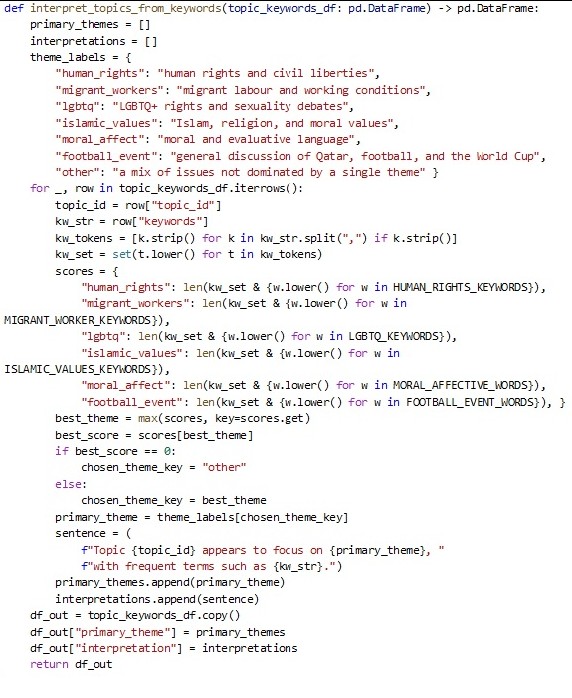
The optimal number of topics for each video has been presented in Table 4. After determining this number of topics, the next step is to identify the keywords and main themes that constitute each of the best topics. This theme extraction process is performed using the Python code presented in Figure 4 (see appendix). The code repository is available at https://github.com/mdidikrw/ams.
The output from the Python code execution (presented in Figure 4) is compiled and summarized in Table 5. This table presents the most dominant topics identified within the comments of each video.
Table 5. The Most dominant topics
| ID | LDA RESULT | |||
| Topic _id | Top Term (Per Topic) | Interpreted Theme | Representative Comment | |
| 1 | 0 | qatar, country, world, cup, fifa, like, one, corruption, western, host, know, see, people, worker, good | General discussion of Qatar, football, and the World Cup | FIFA’s corrupt system normalizes bribery and Qatar’s bid |
| 1 | bbc, qatar, world, right, people, human, cup, west, football, europe, news, money, country, fifa, let | General discussion of Qatar, football, and the World Cup | Western media hypocrisy: past hosts had abuses too | |
| 2 | 0 | world, qatar, country, people, cup, western, one, like, india, muslim, well, fifa, medium, poor, documentary | General discussion of Qatar, football, and the World Cup | Qatar World Cup fuels propaganda, slavery claims, cultural backlash. |
| 1 | qatar, country, right, worker, like, western, woman, human, work, even, west, people, lol, would, get | Human rights and civil liberties | West condemns Qatar, yet relies on its energy | |
| 3 | 0 | love, western, know, medium, worker, first, migrant, pay, seen, died, terrorist, good, people, company, working | Migrant labor and working conditions | Comments praise Qatar’s hosting, stress Arab pride and unity, yet note labor issues and reform hopes. |
| 1 | qatar, one, world, west, good, deal, majority, outside, lghdtv, care, woth, overwhelming, luck, country, people | General discussion of Qatar, football, and the World Cup | Blame Western companies and media, migrants exploited | |
| 2 | government, good, human, like, arab, right, look, african, west, country, thanks, south, better, cry, qatar | Moral and evaluative language | Most outside West dismiss LGBTQ concerns, Western firms profit. | |
| 3 | africa, worker, slavery, south, fifa, may, best, migrant, everything, respect, give, people, day, everyone, whole | Migrant labor and working conditions | World Cup built on kafala slavery, deaths, and corruption | |
| 4 | country, qatar, many, never, change, thing, world, hypocrite, arab, money, worker, people, even, issue, still | General discussion of Qatar, football, and the World Cup | Criticize Qatar’s hypocrisy and migrant deaths, despite whataboutism | |
| 5 | world, cup, football, life, country, fifa, human, qatar, time, right, yes, made, let, host, stadium | General discussion of Qatar, football, and the World Cup | Mixed reactions: celebrate Qatar, debate human rights hypocrisy. | |
| 4 | 0 | country, qatar, western, migrant, come, take, home, west, anyone, make, way, need, money, world, look | General discussion of Qatar, football, and the World Cup | Migrant abuse is wrong. Western hypocrisy is worse |
| 1 | people, condition, qatar, worker, work, way, time, living, see, know, money, right, home, make, much | Migrant labor and working conditions | Gulf wealth built on workers’ inhumane living conditions. | |
| 2 | world, qatar, much, going, victor, better, slavery, make, living, see, know, visit, west, east, middle | General discussion of Qatar, football, and the World Cup | Qatar’s lavish World Cup enabled by modern slavery. | |
| 3 | worker, like, money, construction, work, get, europe, time, need, anyone, wage, much, slavery, home, victor | Migrant labor and working conditions | Money-driven exploitation: hypocrisy on workers’ rights worldwide. | |
| 4 | human, right, country, look, visit, europe, condition, living, migrant, slavery, east, much, need, better, work | Human rights and civil liberties | Human rights need enforcement, don’t excuse abuse | |
| 5 | middle, east, many, know, wage, anyone, visit, like, qatar, construction, look, victor, worker, human, europe | Migrant labor and working conditions | Double standards hide Gulf exploitation, migrants return in coffins. | |
| 5 | 0 | going, west, alcohol, booze, watch, also, first, drug, dont, god, news, football, make, expect, stadium | General discussion of Qatar, football, and the World Cup | West attacks Qatar, no booze, no hooligans. |
| 1 | even, comment, qatar, others, every, ever, woke, stadium, player, stop, country, god, dont, going, western | General discussion of Qatar, football, and the World Cup | Don’t go if you dislike Qatar’s rules | |
| 2 | country, qatar, football, like, one, beer, news, fifa, fan, law, culture, medium, respect, alcohol, first | General discussion of Qatar, football, and the World Cup | Guests must respect Qatar’s laws, despite criticism. | |
| 3 | world, cup, people, qatar, right, western, human, fan, culture, respect, since, trying, get, player, expect | General discussion of Qatar, football, and the World Cup | Expressions of support withdrawal linked to human-rights concerns. | |
| 6 | 0 | money, time, still, yes, west, world, qatar, propaganda, like, europe, argentina, european, news, lol, problem | General discussion of Qatar, football, and the World Cup | Qatar propaganda collapsed, West hypocrisy exposed, Argentina triumphed. |
| 1 | world, cup, qatar, best, well, great, ever, done, thanks, football, fan, good, new, one, say | General discussion of Qatar, football, and the World Cup | Best World Cup ever, Qatar’s hospitality and organization praised. | |
| 2 | many, died, country, migrant, people, death, worker, qatar, family, number, construction, qatari, million, population, poor | Migrant labor and working conditions | Migrant deaths debated, numbers exaggerated, compensate families. | |
| 3 | western, country, qatar, medium, right, human, people, year, never, middle, world, perception, east, interview, change | General discussion of Qatar, football, and the World Cup | Western media hypocrisy: moralising Qatar while ignoring home issues. | |
| 4 | world, cup, football, want, alcohol, thing, like, even, people, day, see, country, look, better, qatar | General discussion of Qatar, football, and the World Cup | Mixed reactions: Qatar praised for order, criticized for abuses | |
| 7 | 0 | qatar, country, worker, muslim, right, people, like, islam, migrant, world, even, human, make, know, stadium | Migrant labor and working conditions | Migrant deaths aren’t racism. Qatar’s abuses justify strong criticism. |
| 1 | world, qatar, people, country, muslim, cup, western, allah, west, one, well, respect, see, said, culture | General discussion of Qatar, football, and the World Cup | Respect Qatar’s Islamic culture. No alcohol or LGBTQ. | |
| 8 | 0 | country, people, qatar, right, human, like, worker, world, one, say, thing, want, know, many, west | General discussion of Qatar, football, and the World Cup | Migrant abuse isn’t religious. Selective outrage is hypocrisy. |
| 1 | world, cup, fifa, watch, john, would, one, like, qatar, money, even, football, get, time, work | General discussion of Qatar, football, and the World Cup | Watch the full press conference. Media cherry-picks narratives. | |
| 9 | 0 | world, saying, fuk, que, los, tan, hay, saludos, mujer, hermosa, mortales, muy, ver, abian, felicidades | General discussion of Qatar, football, and the World Cup | Religious spam: repent to Jesus, rapture imminent. |
| 1 | country, people, qatar, world, arab, worker, like, cup, gulf, money, work, right, human, one, know | General discussion of Qatar, football, and the World Cup | Migrant abuses acknowledged. Western hypocrisy, Qatar offers jobs. | |
| 10 | 0 | european, people, today, europe, feel, qatar, right, country, like, money, say, thing, said, human, west | Human rights and civil liberties | European hypocrisy claims: fix West before judging Qatar. |
| 1 | world, qatar, country, cup, fifa, people, year, one, right, football, like, get, still, fact, also | General discussion of Qatar, football, and the World Cup | Qatar bought the World Cup, FIFA corruption persists. | |
Note: Representative Comments are analytically summarized from multiple high-probability comment clusters rather than quoted verbatim, to enhance interpretability and reduce traceability.
Discussion
Alignment Between Video Framings and Comment Topics
The topic modeling results (Table 5) reveal the themes contained within the audience comments, reflecting their perceptions and responses to the video content presented. A detailed interpretation regarding the relationship between the narrative framing of the YouTube videos and the thematic responses in the comments is provided in the following description.
- Video 1 – BBC “How Qatar got to host the World Cup”
At the transcript level, video 1 offers a strongly critical, investigative framing: it foregrounds FIFA corruption, the kafala system, unpaid wages, unsafe living and working conditions, and migrant deaths. Migrant labor and human-rights violations are central, with little attention to religion or cultural diplomacy.
In the comments, the LDA topics are labeled as general discussion of Qatar, FIFA, and the World Cup. However, the keyword sets still include terms such as “corruption,” “worker,” and “Western.” This indicates partial alignment between the video frame and audience responses. Viewers do pick up on corruption and exploitation, but they integrate these issues into a broader and more diffuse conversation about Qatar 2022 and FIFA politics. The investigative frame therefore shapes what is discussed, but it is less often sustained as a distinct topic centered solely on labor or rights. Instead, the comment debate tends to widen into more general evaluations of Qatar and “the West.”
- Video 2 – DW “Qatar – In the spotlight of the World Cup”
The transcript of Video 2 balances two elements. It highlights Qatar’s soft power, identity transformation, and geopolitical role. It also acknowledges dependence on migrant labor and human-rights concerns. The tone is more nuanced than Video 1. Labor issues are present, but they are embedded within a wider narrative of national development and global visibility.
The comments show a clearer split. One LDA topic reflects general discussion of Qatar and the World Cup. Another is explicitly oriented toward human rights and civil liberties, with keywords such as right, worker, western, and woman. Here, the audience sharpens one strand of the documentary. Commenters extract the labor and rights dimension and sustain it as a distinct topic. At the same time, they continue to engage the broader soft-power narrative. Compared to the transcript, the comment space displays a clearer separation between “Qatar as rising power” and “Qatar as a site of rights abuses”.
- Video 3 – “How will the 2022 FIFA World Cup change Qatar and the region?”
Video 3’s transcript presents a complex frame. It foregrounds migrant exploitation, human-rights issues, and LGBTQ+ controversies. At the same time, it emphasizes reform efforts and Europe’s reluctance to acknowledge them. The transcript also uses a relatively high density of moral language. Overall, the framing centers on a tension between an abusive past and a claimed improving present.
The comment LDA structure mirrors this complexity. Several topics focus on migrant labor and working conditions, with keywords such as worker, migrant, slavery, wage, and construction. Another topic clusters moral and evaluative terms. A further topic captures more general discussion about Qatar and the West. This pattern suggests strong alignment between the transcript and the comments. Viewers pick up both labor abuses and the moral ambivalence of the situation. They also reproduce that ambivalence in their own discussions. The framing of “reform versus responsibility” therefore becomes an active debate in the comments rather than a settled narrative.
- Video 4 – France 24 “The shadow workers of Qatar”
The transcript of Video 4 is one of the starkest; it is almost entirely devoted to migrant workers’ conditions, housing, wages, and explicit human-rights violations. Qatar is framed as relying on a hidden, exploited workforce; religious or cultural soft power is virtually absent.
The comments respond in kind. LDA reveals topics tightly focused on migrant labor and working conditions and human rights and civil liberties, alongside a more generic Qatar/World Cup layer. Keywords emphasize worker, migrant, condition, wage, construction, slavery, living, human, and right. Here, the audience largely accepts and amplifies the investigative framing. The comment section functions as an extension of the report’s agenda, with relatively little off-topic chatter: users recount or debate conditions, make comparisons with Europe, and argue about the scale of the abuses. This is one of the clearest cases where video and comments converge on a shared problem definition.
- Video 5 – “World Cup 2022: What to expect from Qatar”
At the transcript level, Video 5 is a preview that lists the main controversies: exploitation of migrant workers, human-rights issues (including LGBTQ+), corruption in Qatar’s selection, and some references to Islamic values and local norms. The frame is multi-issue and somewhat journalistic; it enumerates what viewers “should know” before the tournament.
By contrast, the comment LDA topics, although labeled as general discussion, are filled with keywords such as alcohol, beer, booze, law, culture, respect, god, and fan. This indicates that commenters re-center the debate on everyday fan experience and cultural norms. Much of the discussion turns to whether one can drink, how fans should behave, and what it means to respect local laws and Islamic values. Labor abuses and formal human-rights discourse move to the background. They may still appear, but they do not drive the main threads. Instead, the debate is pulled toward lifestyle disputes and culture-war framing. In this case, the transcript provides a broad map of controversies, while the audience amplifies the issues that feel most immediate to them as fans.
- Video 6 – “Has the World Cup ‘changed the perception’ of the Middle East?”
Video 6’s transcript is relatively long and focuses on soft power and image change. It asks whether the tournament has shifted global perceptions of Qatar and the Middle East. It also acknowledges worker exploitation, human-rights concerns, and subsequent reforms. In addition, it touches on Islamic culture and hospitality.
The comments reflect this duality. One set of topics celebrates the tournament with keywords like world, cup, best, great, ever, thanks, football, fan, echoing the transcript’s narrative of a successful, impressive event. Another set of topics foregrounds terms such as many, died, migrant, death, worker, construction, and number. These comments also engage with Western media coverage and perceptions. As a result, the comment section sits at the intersection the video tries to frame. The debate oscillates between “best World Cup ever” and “how many workers died?”. The video’s question about perception change is therefore answered in a fragmented way. Some commenters embrace the intended soft-power message. Others keep deaths and exploitation at the center of the story. They often invoke Western media coverage as part of that insistence.
- Video 7 – “This is why they REALLY hate on Qatar”
Transcript analysis identifies Video 7 as the clearest Islamic counter-frame. It acknowledges Western criticism of labor, rights, and LGBTQ+ issues. It then reframes these criticisms as evidence of Western hypocrisy, neo-colonial resource theft, and Islamophobia. Islamic vocabulary and moral language are extremely dense. Qatar is defended as a Muslim country under unjust Western attack, and the narrative has a strong da‘wah-like tone.
The comment LDA results align almost perfectly with this framing. One topic mixes worker, muslim, islam, right, human, stadium, and migrant, indicating that discussions of labor and rights are entangled with Muslim identity and Islamic ethics. Another blends muslim, western, allah, culture, and respect, suggesting debates about respect, religion and the West. Commenters mostly adopt and amplify the video’s narrative rather than challenging it. This turns the comment section into an echo chamber. Worker exploitation is interpreted through an explicitly Islamic lens, framed as evidence of Western double standards and hostility toward Muslim societies. In this case, both transcript and comments co-produce a powerful Islamic soft-power and defensive da‘wah discourse.
- Video 8 – “Qatar World Cup: Last Week Tonight with John Oliver”
The transcript of Video 8 is sharply critical yet comedic: it details exploitation of workers, human-rights violations and LGBTQ+ issues, while also highlighting FIFA’s complicity, all wrapped in John Oliver’s humor. The framing is therefore a mix of serious indictment and satirical entertainment.
In the comments, LDA identifies topics that are broadly general discussion, but the keywords include both rights/workers/West and entertainment markers such as John, watch, fifa, money, and football. This suggests a hybrid response: some commenters engage with the critical content, discussing exploitation and Western responsibility. Others focus on Oliver’s performance, jokes and the show as a media product. Compared to the highly focused France 24 piece, this video’s comedic packaging seems to produce a looser issue structure in the comments, where moral outrage, political critique and fan appreciation co-exist but do not crystallize into sharply separated topics.
- Video 9 – BBC “Under-reporting deaths in Gulf’s killer heat”
Video 9’s transcript is, like Video 4, heavily focused on heat, under-reported deaths and human-rights abuses affecting migrant workers. It is an investigative piece that treats the World Cup as a case study in systemic harm.
The comments, however, are more fragmented. One LDA topic is filled with non-English phrases and greetings, indicating off-topic or social chatter, while another includes country, people, qatar, world, arab, worker, money, work, right, and human. This second topic does echo the transcript’s concern with workers and rights, but overall the comment section is less tightly aligned with the investigative frame than in video 4. The video injects a strong labor-rights narrative into the platform, yet only part of the audience takes it up; a significant portion uses the space for more casual interaction, illustrating the limits of control content producers have over how their videos are taken up.
- Video 10 – “Gianni Infantino’s speech – ESPN FC”
Infantino’s speech, as reflected in the transcript, offers a defensive framing. It acknowledges workers and LGBTQ+ controversies but largely avoids formal human-rights language, emphasizing instead unfair judgement, collective guilt, and the need for unity. The video thus seeks to reframe criticism, shifting attention from violations to Western hypocrisy and global cooperation.
The comments partially resist this reframing. LDA reveals a strong topic clearly labeled “human rights and civil liberties”, with keywords such as european, people, europe, right, human, and west indicating that viewers are reintroducing a rights-based vocabulary and explicitly reflecting on Europe’s role and responsibility. Alongside this, a more general topic covers Qatar and the World Cup. This suggests that while some commenters accept or discuss Infantino’s appeal for understanding, others re-anchor the debate in human-rights terms that the speech tries to sidestep. The result is a comment space that negotiates and contests the official defense rather than simply echoing it.
Interaction Between Content Framing and Comment Topics
Analysis of the transcripts and comments suggests that the YouTube audience does not merely reflect the frames presented to them, but rather selects, reinforces, dilutes, or opposes those frames in a patterned manner.
- In strongly investigative videos focused on labor and rights (especially videos 1, 2, 3, 4 and 6), comments tend to align with and elaborate the critical framing, sometimes adding moral and geopolitical dimensions.
- In videos framed around Islamic counter-narratives and Western hypocrisy (particularly video 7), comments reinforce and intensify the religious and moral framing, turning the space into a site of digital da‘wah and identity affirmation.
- In preview or entertainment-oriented videos (videos 5, 8, 9), the comment sections become hybrid spaces, where elements of critique coexist with humor, fandom, and lifestyle debates, and where the sharper elements of the transcript may be partially diluted or redirected (for instance, from labor abuses to alcohol and culture).
- In defensive or justificatory content (video 10), the comments often push back, reintroducing the human-rights vocabulary that the speaker seeks to soften or bypass.
These patterns show that the controversies around Qatar 2022 are not only structured in professional media content. They are also actively reworked by audiences in the comment sections. The key themes include migrant exploitation, human rights, Western hypocrisy, Islamic values, and LGBTQ+ issues. The interaction between transcript framings and LDA-derived comment topics offers a concrete illustration of YouTube as a contested arena. In this arena, soft power, economic interests, and digital da‘wah intersect with bottom-up public reasoning.
Conclusion
Text mining of the sampled YouTube videos shows that institutional news and documentary channels frequently foreground migrant labor exploitation, human-rights violations, and LGBTQ+ discrimination. In these videos, religion tends to play a relatively marginal role. By contrast, faith-based advocacy creators and some Qatar-based international programming more often emphasize Islamic values, hospitality, and organizational achievement. They frame the tournament as a source of pride and situate it within broader narratives of digital da‘wah. Comment sections then function as spaces where these framings are selectively reinforced, reinterpreted, or contested. Some commenters intensify labor and human-rights critiques. Others mobilize counter-narratives centered on Western double standards, Islamophobia, or national sovereignty.
Beyond the YouTube platform, available survey, tourism, and economic indicators point to a complex and differentiated post-tournament landscape. Domestic survey data suggest that many residents perceived the World Cup as improving quality of life, tourism infrastructure, and Qatar’s international visibility, while also promoting Arab and Islamic culture (The FIFA World Cup Qatar 2022TM Survey 2023). Official tourism statistics and secondary analyses document substantial growth in visitor numbers after 2022 and continued expansion in non-energy sectors, alongside arguments that the tournament strengthened Qatar’s sport-tourism positioning and future tourism trajectory (Jones et al. 2022; MEMO:Middle East Monitor 2023; Qatar Tourism 2024a; Qatar Tourism 2024b; Hajjaj et al. 2024; Manurung and Ramadhan 2025). Macro-level assessments further estimate that World Cup-related tourism and associated revenues contributed a measurable, though limited, share of GDP in 2022, while highlighting potential longer-term gains through infrastructure, tourism capacity, and investment (Bibolov et al. 2024). In soft power terms, global branding assessments also position Qatar 2022 as a salient reputational event within broader international image-building (Jagodzinski 2023).
At the same time, survey and experimental evidence from Western Europe suggests that human-rights–focused framings of Qatar 2022 are associated with more negative attitudes. Frames that emphasize organizational success are associated with comparatively more favorable evaluations. Public opinion in the UK also became more unfavorable over the course of the tournament (Gerschewski et al. 2024; Raven 2023). Post-tournament coverage in major Western outlets continues to foreground labor, corruption, and LGBTQ+ issues. This suggests that these themes remain prominent in Western media narratives beyond the event itself (MacInnes 2024). Taken together, these findings show that reputational contestation surrounding Qatar 2022 unfolds unevenly across platforms, audiences, and geographic contexts. Critical framings, supportive counter-narratives, and hybrid positions coexist within a broader digital media ecology. Post-tournament tourism and macroeconomic indicators also reflect multiple drivers. These include post-pandemic travel recovery, policy changes, airline capacity, and the events calendar. Rather than demonstrating causal “limits of sportswashing”, this study highlights the complexity of how mediated reputation, audience attention, and macro-level performance intersect. The evidence suggests that contested digital framings do not straightforwardly map onto tourism and economic outcomes. Instead, they operate alongside them within a broader landscape of soft power negotiation, media management, and platform-dependent visibility.
Appendix
Data and Code Availability: The Python code used for transcript processing, dictionary-based analysis, and LDA topic modeling is available at https://github.com/mdidikrw/ams. API keys and other credentials are not shared. Consistent with platform terms and ethical handling of public user-generated content, the repository does not redistribute full raw comment datasets or transcripts. Instead, it provides video identifiers/URLs and scripts to re-collect the data and reproduce the analysis pipeline.
Figure 1. Analysis and Framing of Video Transcripts
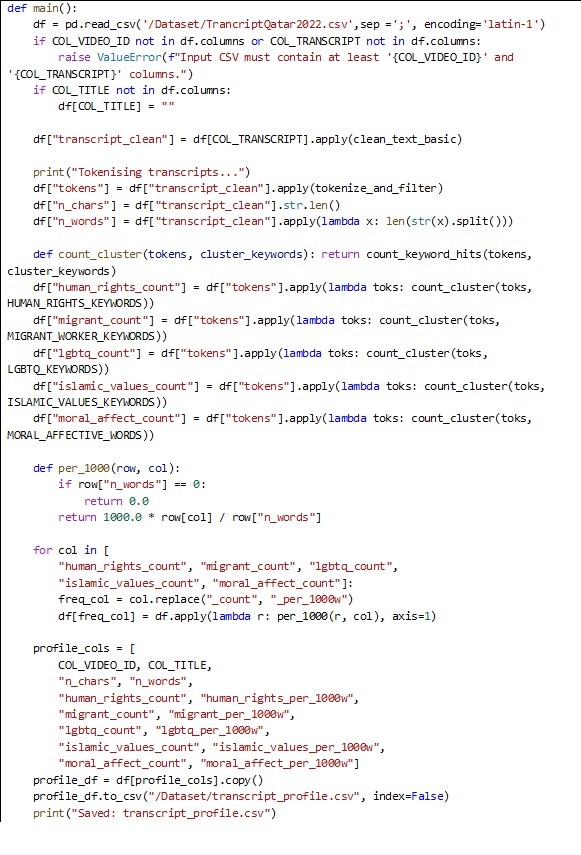
Figure 2. Data retrieval process
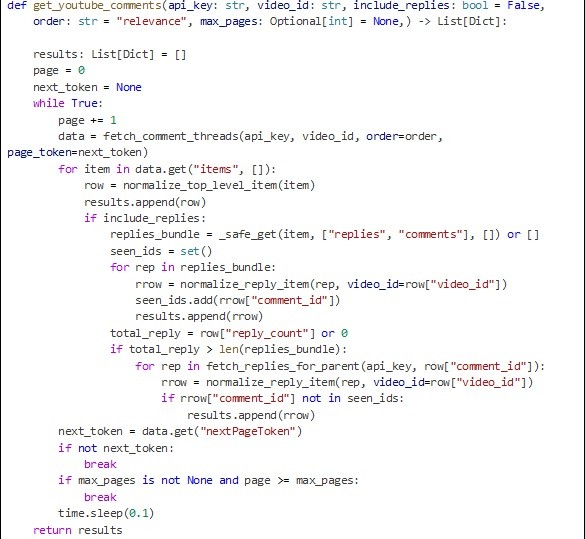
Figure 3. Coherence calculation
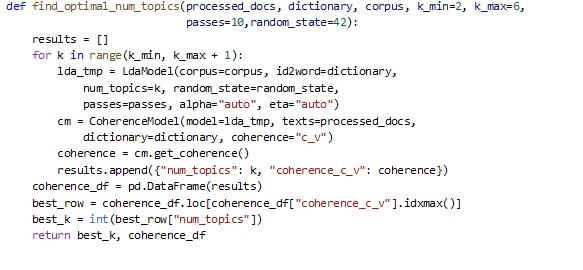
Figure 4. Theme extraction process